Using CBT to Manage Panic Attacks: Take Control of Your Anxiety

If you frequently find yourself struggling with sudden, intense surges of fear that feel overwhelming—a racing heart, chest pain, and the acute sense that something is terribly wrong—you are experiencing panic attacks. This experience, while deeply distressing, is not a permanent fixture of your life. It is a highly treatable condition.

For individuals seeking a practical, evidence-based path to lasting relief, Cognitive Behavioral Therapy (CBT) offers the solution. CBT is not just about coping with symptoms; it is about retraining your brain and body to break the cycle of fear. This guide details the core components of CBT and outlines how this powerful approach can help you reclaim a life free from panic’s grip, including how to find expert guidance on using CBT to manage panic attacks in New Haven and the surrounding Connecticut communities.

The Best Way to Manage Panic Attacks

The gold-standard psychological treatment for panic attacks and Panic Disorder is Cognitive Behavioral Therapy (CBT), specifically components like Cognitive Restructuring and Interoceptive Exposure. CBT works by helping you:

  1. Identify and challenge the catastrophic thoughts (e.g., “I am going to faint”).
  2. Gradually face the feared physical sensations (e.g., rapid heart rate, dizziness).
  3. Break the cycle of avoidance that sustains the fear.
  4. Try finding tools, such as MindfulCoping.com, which offers free, audio-guided lessons and exercises to teach you science-based skills for managing stress and emotions.

By changing how you think and react to the physical signs of panic, CBT effectively dismantles the fear that fuels the attack.

using cbt therapy to stop panic attack in New Haven, CT

The Science of Panic: Why Your Alarm System MisFires

A panic attack is a highly unpleasant physical and emotional response rooted in a fundamental survival mechanism: the fight or flight response. When your brain perceives a threat—whether real (a charging bear) or imagined (a slight chest tightness)—it floods your body with adrenaline and cortisol.

The issue in Panic Disorder is that this internal alarm system misfires. The danger is internal—a subtle shift in breathing, a natural heart palpitation—but the brain interprets it as external, life-threatening danger.

The Panic Cycle Explained

The panic attack escalates through a cycle of misinterpretation:

  1. Sensation: You feel a normal bodily change (e.g., slight breathlessness).
  2. Misinterpretation: You assign a catastrophic meaning to the sensation (e.g., “I’m suffocating”).
  3. Anxiety Spike: The catastrophic thought triggers a severe fear response.
  4. Physical Escalation: Adrenaline surges, intensifying the symptoms (faster heart rate, dizziness).
  5. Avoidance: You exit the situation (or avoid it in the future) to gain relief, reinforcing the idea that the situation was, in fact, dangerous.

This cycle is what keeps panic disorder alive. To understand more about the conditions Dr. Roos addresses with these methods, please visit the Expertise page.

Cognitive Behavioral Therapy (CBT): The Gold Standard Treatment

CBT is not merely a tool for stress reduction; it is a highly effective, structured, and goal-oriented form of psychotherapy. It is based on decades of research showing that how we think (cognitions) and what we do (behaviors) dictates how we feel (emotions).

For panic, CBT targets the central flaw in the panic cycle: the catastrophic misinterpretation of normal physical sensations. By modifying both the thought pattern and the behavioral response (avoidance), CBT equips you with the permanent skills needed to interrupt the attack before it spirals.

The Core Principles of CBT for Panic

Effective CBT for panic disorder integrates several key components, often blending behavioral and cognitive techniques into a collaborative treatment plan:

  1. Psychoeducation: Learning exactly what panic is (a surge of adrenaline, not a medical emergency) demystifies the experience and reduces the fear of the unknown.
  2. Cognitive Restructuring: Learning to identify and challenge the automatic, negative, and catastrophic thoughts that drive the escalation of fear.
  3. Exposure: Systematically and safely facing the sensations and situations that have been avoided, allowing the brain to learn that they are not dangerous.

This approach ensures that treatment is targeted and provides measurable improvement, emphasizing the link between clinical research and practical patient outcomes, which is central to the practice’s philosophy as detailed on the About page.

trying cbt therapy with a therapist in New Haven, CT

Practical CBT Strategies to Disarm Panic

The success of CBT lies in its practical application. Treatment is an active process that involves “homework” and consistent practice of skills to ensure lasting change.

1. Reinterpreting Bodily Sensations (Interoceptive Exposure)

Since the fear is driven by physical sensations, CBT involves deliberately bringing these sensations on in a safe environment. This is often the most critical step to truly extinguishing panic.

  • The Goal: Teach your brain that a racing heart is just a heart racing—not a heart attack.
  • The Process: Under a therapist’s guidance, you might perform activities like holding your breath, shaking your head, or hyperventilating to recreate the specific sensations you fear.
  • The Outcome: Repeated exposure teaches your brain to habituate. The initial anxiety spike gradually lessens until the sensation no longer triggers the full-blown panic response.

2. The Cognitive Challenge

When the “What if?” thoughts begin, your CBT task is to respond with a challenge, not an acceptance. This technique breaks the thought-feeling link that fuels the attack.

A Step-by-Step Guide to the Cognitive Challenge:

  1. Identify the Thought: “I’m going to lose control in this store.”
  2. Test the Evidence: “What is the evidence that I’m going to lose control? Have I ever lost control before? No. People around me look normal. I’m just feeling intense anxiety.”
  3. Rate the Danger: On a scale of 0 to 100, how likely is it that the feared event will actually happen? (Usually very low).
  4. Create a Balanced Reframe: “I am experiencing high anxiety, which is uncomfortable. I have my breathing tools, and the feeling will pass on its own. I am safe.”

This skill takes practice, but it is the most powerful tool for regaining rational control during an attack. You can find downloadable resources and tools to aid in practicing these skills on the Coping Tools section of this site.

Catastrophic Thinking PatternDescription of the DistortionCBT Reframe Example
CatastrophizingAlways assuming the worst-case scenario will occur.“This dizziness means I’m about to faint.” → “I’m lightheaded from anxiety, not physical danger.
Filtering/FocusingFocusing exclusively on the negative bodily symptoms.“All I can feel is the tightness in my chest.” → “I also feel my feet on the ground and hear the sounds around me. I can shift my focus.
Predictive CatastropheTreating a predicted fear as a certainty (e.g., “I know I will fail”).“If I go to the party, I will panic and everyone will stare.” → “I can manage the discomfort at the party, and if I feel anxious, I will use my coping skills.

Finding Expert Support for CBT in the New Haven Area

While CBT principles are universal, the success of treatment often hinges on finding a highly trained and experienced practitioner. For those looking for effective, specialized care in Connecticut, finding a clinician familiar with the leading research and practice protocols is key.

If you are using CBT to manage panic attacks in New Haven or surrounding towns like Branford, Guilford, or Milford, seeking a cognitive behavioral specialist ensures you receive the highest standard of evidence-based care. Considerations for Starting Treatment: Virtual vs. In-Person CBT (20-Word Blurb)

You can choose effective CBT via in-person sessions or virtual telehealth. Compare options for your panic treatment here: Virtual vs. In-Person Therapy in New Haven, CT. A doctor like Corey Roos PhD, offers personalized therapy services and expertise.

Local Search Considerations

When seeking therapy in the greater New Haven area:

  • Prioritize Specialization: Look for psychologists or clinicians who list Panic Disorder and CBT or Exposure Therapy as primary areas of expertise. Specialized training often means a more efficient path to recovery.
  • Location and Accessibility: Whether you prefer in-person visits in a comfortable, local office setting or the convenience of telehealth across Connecticut, confirm the provider’s geographic coverage.
  • Consultation: Take advantage of the consultation process to ask about their approach to panic—they should be able to clearly explain the role of exposure in their treatment plan.

The right partnership can transform your recovery. For general insights and further reading on effective therapies, explore the articles in the Insight section.

sitting alone trying CBT therapy in New Haven, CT

Moving Forward: FAQs on Panic Recovery

Can CBT really “cure” my panic attacks?

While we prefer the term “managing,” CBT is highly effective, leading to significant reductions in both the frequency and severity of attacks for most people. The goal is to fundamentally change your reaction to the physical sensations, meaning the panic cycle breaks and the attacks no longer control your life.

How long does CBT for panic typically last?

CBT for panic is generally a time-limited, brief therapy. Many individuals see substantial improvement within 8 to 20 weekly sessions, as the focus is on learning and implementing specific, measurable skills rather than open-ended exploration.

What about the financial investment?

Investing in your mental health is investing in your overall quality of life. To understand the costs associated with specialized therapy services and how they relate to your specific financial and insurance situation, please review the Fees page for detailed information.

What is the best first step to take?

If you are ready to begin the work of using CBT to manage panic attacks and live a freer life, the best first step is to reach out and schedule a consultation. This allows for a proper assessment and the development of a tailored treatment plan based on your unique needs.

Ready to start learning the skills that will empower you to defeat panic? The opportunity to find relief is here. Please visit the Contact page or use the link below to begin your consultation and take the first step toward living anxiety-free.

Schedule an Appointment to begin your consultation.

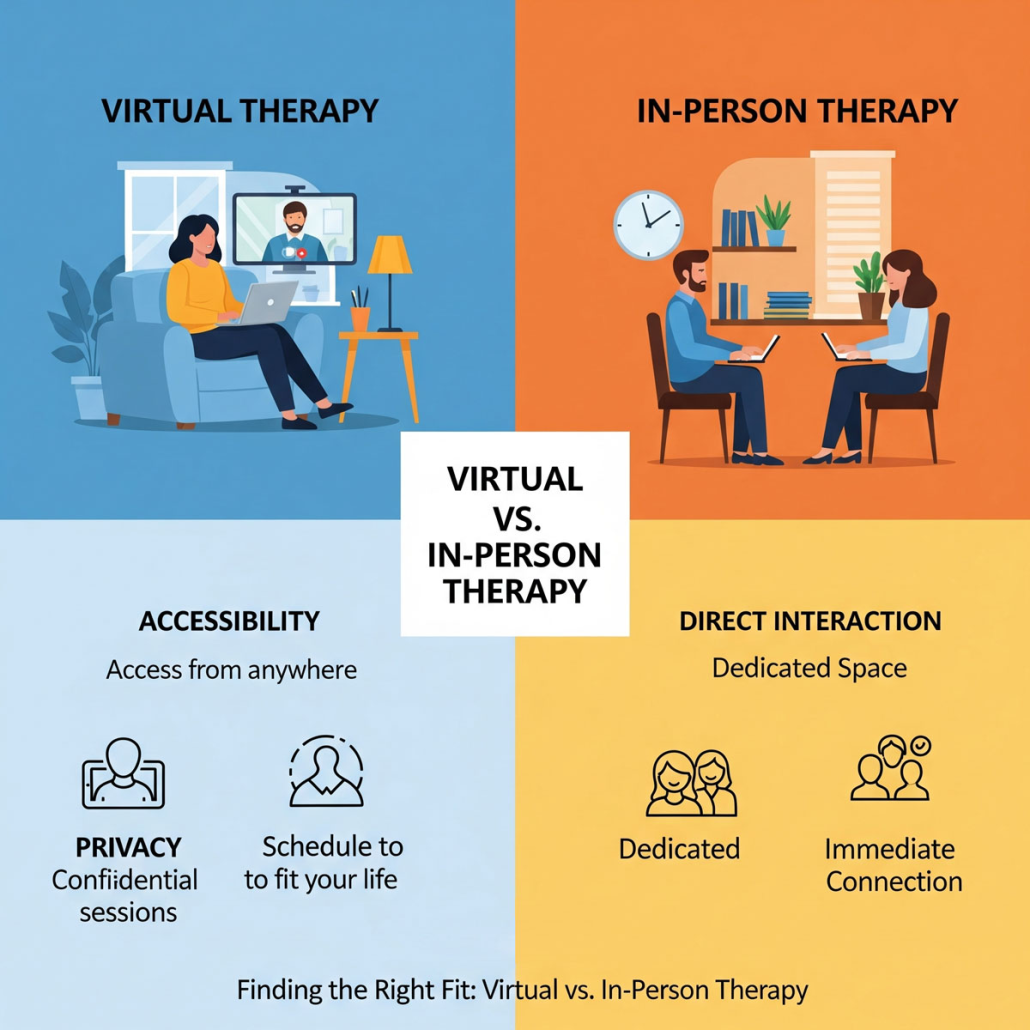
Virtual vs In-Person Therapy – Which Is Right for You in New Haven, CT?

Starting therapy is a big step toward improving your mental health and overall well-being. But before beginning, many people wonder whether they should meet with a therapist virtually or face-to-face. Both options are widely available in New Haven, CT, and each comes with unique benefits. The choice often depends on your lifestyle, comfort level, and personal needs.

So, which is the better option, virtual vs. in-person therapy?

Virtual therapy offers flexibility and convenience, while in-person therapy provides face-to-face connection. Both are effective for treating depression, anxiety, and other mental health challenges, and the best choice often depends on personal preference, lifestyle, and access to local providers in New Haven, CT.

What Is Virtual Therapy?

Virtual therapy (sometimes called teletherapy or online counseling) is when you meet with your therapist through a secure video platform or phone call. This option became more common during the pandemic and continues to grow in popularity.

Key benefits of virtual therapy include:

  • Convenient access from home, work, or anywhere with privacy
  • Eliminates travel time and transportation challenges
  • Easier scheduling for busy professionals, parents, or students
  • Accessible for individuals with mobility limitations

What Is In-Person Therapy?

In-person therapy means attending sessions face-to-face at your therapist’s office. Many people still prefer this format, as it provides a familiar, personal setting for their mental health work.

Key benefits of in-person therapy include:

  • Stronger sense of personal connection and rapport
  • Fewer technical issues (such as internet problems)
  • Comfort in a dedicated therapeutic environment
  • Easier access to certain therapy tools and interventions

Virtual vs In-Person Therapy: Which Is More Effective?

Research shows that both virtual and in-person therapy are effective for conditions like depression, anxiety, and stress-related concerns. Some studies even suggest that virtual therapy can be just as effective as in-person therapy for many people.

If you’re searching for a compassionate therapist in New Haven, CT, you have options for both virtual and in-person care.

Effectiveness depends on factors such as:

  1. The type of therapy being used (e.g., CBT, mindfulness-based therapy)
  2. Your comfort with technology and online communication
  3. The severity and complexity of your concerns
  4. Your ability to engage fully in sessions, whether online or in person

If you live in New Haven, CT, you may have access to both formats and can decide which feels like the best fit for you.

How to Decide Between Virtual and In-Person Therapy

When choosing, consider the following questions:

  • Do I feel more comfortable opening up face-to-face or from home?
  • Is travel to a therapist’s office in New Haven convenient for me?
  • Do I have a private, quiet space for online sessions?
  • Am I seeking a specific therapy type that works better in person?

Sometimes people start with virtual sessions for convenience, then transition to in-person as their schedule allows—or vice versa.

Quick Comparison Table

FactorVirtual TherapyIn-Person Therapy
ConvenienceHighModerate
Privacy at homeVariesHigh
Connection styleScreen-basedFace-to-face
Technology neededYesNo
Travel requiredNoneYes

Local Considerations: Therapy in New Haven, CT

For residents of New Haven, CT, the decision may also depend on availability of local providers. While virtual therapy expands your options to providers across Connecticut, in-person therapy allows you to connect directly with therapists in the New Haven community. Being able to walk into a familiar office may add a sense of grounding and stability to your care.

Frequently Asked Questions

Where is a good place to start looking for a therapist?
A good place to start is Psychology Today’s therapist directory. You can filter by location, including New Haven, CT, to find providers who offer virtual or in-person sessions.

Is virtual therapy covered by insurance in Connecticut?
Many insurance plans now cover telehealth services. Always check with your insurance provider to confirm coverage for virtual sessions.

Can I switch from virtual to in-person therapy later?
Yes. Many therapists in New Haven offer both formats and can work with you to transition if your needs or preferences change.

Which is better for depression and anxiety: virtual or in-person therapy?
Both formats can be effective. What matters most is consistency and finding a therapist you feel comfortable with, whether that’s online or in the office.

Final Thoughts

No matter which format you choose—virtual or in-person—starting therapy is a powerful step toward improving your mental health. If you’re in New Haven, CT and considering therapy, I’d be glad to help you explore your options. Contact Corey Roos, PhD, a licensed therapist in New Haven, CT, to schedule a consultation and begin your path toward greater well-being.

For more information about therapy approaches, you may also explore resources like the American Psychological Association and the National Institute of Mental Health.

How Do I Know If I Need Therapy for Depression?

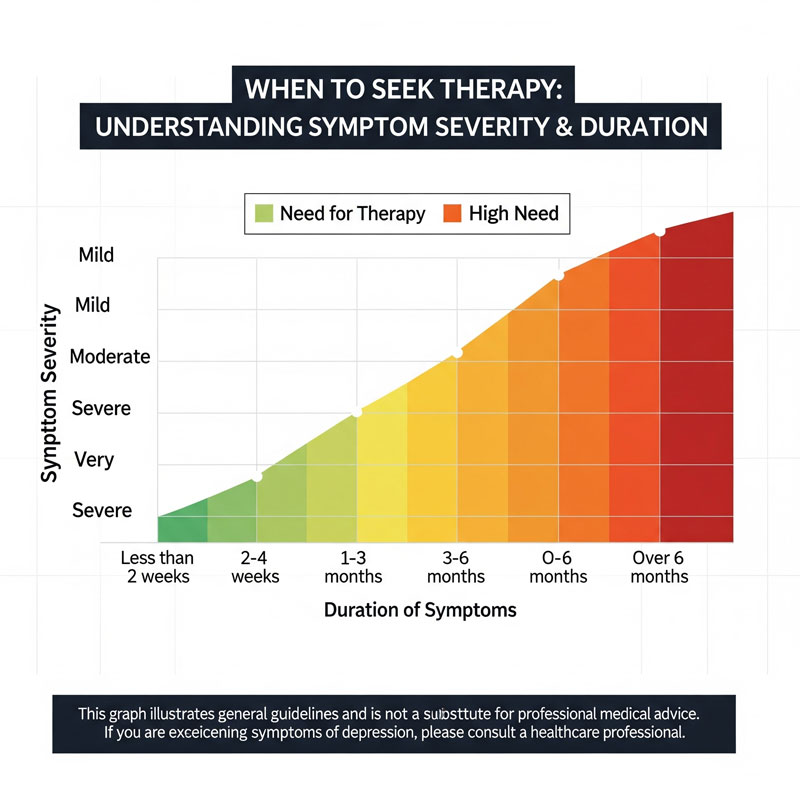
You may need therapy for depression if your symptoms—such as persistent sadness, loss of interest, fatigue, or changes in sleep and appetite—last longer than two weeks, interfere with daily life, or feel overwhelming. A licensed therapist can provide evidence-based strategies to help you manage symptoms and improve your quality of life.

Understanding Depression

Depression is more than feeling sad for a few days. It’s a clinical condition that can impact your mood, motivation, relationships, and even physical health. According to the National Institute of Mental Health, about 1 in 6 adults will experience depression at some point in their lives.

If you’re asking yourself “How do I know if I need therapy for depression?”, you’ve already taken the first important step: recognizing that something feels off and seeking support.

chart depicting therapy symptoms

Common Signs That You May Need Therapy

While depression affects everyone differently, there are common symptoms that may signal it’s time to seek help:

  • Persistent sadness or emptiness lasting most of the day
  • Loss of interest in activities you once enjoyed
  • Changes in sleep—either insomnia or sleeping too much
  • Low energy or fatigue, even after rest
  • Difficulty concentrating or making decisions
  • Appetite changes (eating too much or too little)
  • Feelings of worthlessness or guilt
  • Thoughts of self-harm or suicide

If you experience suicidal thoughts, please call 988 in the U.S. for immediate help.

Even if your symptoms feel “mild,” therapy can provide tools to prevent them from worsening.

When to Consider Professional Help

So, how do I know if I need therapy for depression? Ask yourself these questions:

  1. Are my symptoms interfering with work, school, or relationships?
  2. Have lifestyle changes (exercise, sleep, social support) failed to improve how I feel?
  3. Do I feel hopeless or helpless most days?
  4. Have my symptoms persisted for more than two weeks?
  5. Do I avoid daily responsibilities because I feel too overwhelmed?

If you answered “yes” to two or more, therapy may be the next step.

person experiencing depression at home

Therapy Options for Depression

Different types of therapy have been shown to effectively treat depression. A therapist in New Haven, CT (or in your local area) may recommend:

Cognitive-Behavioral Therapy (CBT)

  • Helps identify negative thought patterns
  • Teaches practical skills to reframe thoughts and behaviors

Mindfulness-Based Therapy

  • Encourages nonjudgmental awareness of emotions
  • Uses meditation and grounding to reduce rumination

Psychodynamic Therapy

  • Explores unconscious thoughts and past experiences
  • Helps understand the root causes of depression

Group Therapy

  • Offers community and support
  • Provides shared coping strategies

Self-Check Table: Do I Need Therapy for Depression?

SymptomFrequencyImpact on Daily LifeConsider Therapy?
Persistent sadnessMost daysPrevents focus at work✅ Yes
Loss of interestDailyAvoiding social events✅ Yes
Sleep problemsFrequentFatigue, irritability✅ Yes
Low motivationConstantStruggling with basic tasks✅ Yes

This table is not a diagnosis, but a tool to help you reflect on whether therapy could benefit you.

Benefits of Therapy for Depression

Working with a licensed psychologist can:

  • Provide coping skills tailored to your needs
  • Offer a safe, supportive environment
  • Reduce symptoms like sadness, fatigue, and negative thoughts
  • Improve relationships and communication
  • Enhance overall well-being and life satisfaction

Therapy is not only about “treating symptoms” but also about helping you build resilience for the future.

Therapy vs. Other Supports

Sometimes people wonder whether they should try therapy, medication, or both. Here’s a breakdown:

  • Therapy only → Best for mild to moderate depression
  • Medication only → Helpful for moderate to severe depression
  • Combination → Often the most effective for long-term recovery

Always consult with a healthcare professional before making decisions about medication.

contemplating going to therapy for depression

Local Perspective: Finding a Therapist in New Haven, CT

If you live in New Haven, you have access to evidence-based therapy through providers who specialize in depression. For example, many Yale-affiliated psychologists integrate cutting-edge research with compassionate care.

At Corey Roos, PhD, therapy is personalized to your unique needs, drawing from CBT, mindfulness, and psychodynamic approaches. You can schedule a confidential appointment here.

FAQs: How Do I Know If I Need Therapy for Depression?

Can depression go away on its own?
Sometimes mild depression improves, but professional support increases the chances of recovery and prevents relapse.

Can therapy help even if my depression feels mild?
Yes. Early intervention can prevent symptoms from worsening and teach coping strategies that improve daily functioning and emotional well-being.

What if I’m not ready to talk about everything?
That’s okay—therapy moves at your pace. A good therapist creates a safe, supportive space.

Where is a good place to start looking for a therapist?
A reliable starting point is Psychology Today’s Therapist Directory. You can search by location, specialty, and insurance to find licensed therapists in New Haven, CT, and compare profiles to see which provider might be the best fit for your needs.

Final Thoughts

If you’ve been wondering “How do I know if I need therapy for depression?”, remember that seeking help is a sign of strength, not weakness. Therapy can help you regain balance, rediscover joy, and build resilience for the future.